1. It Works on Almost Any Property Type
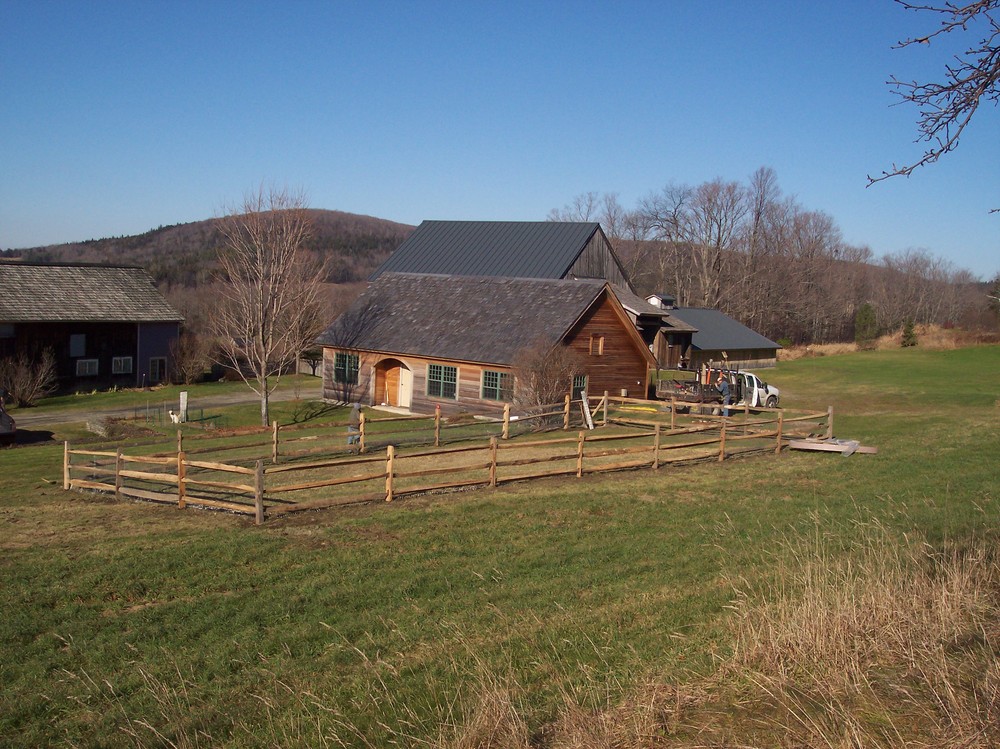
Most fence styles are designed with a specific use in mind. Split rail isn’t. In Vermont, where land crosses between rural and residential, that flexibility matters. You’ll find it used for:
- Marking rural property boundaries
- Framing driveways and front yards
- Containing livestock and horses
- Defining garden edges and landscape features
- Decorative curb appeal on residential lots
You don’t need a different fence for your pasture and your front lawn. Split rail handles both.
2. It Fits Vermont’s Landscape Instead of Fighting It
Ornamental iron looks great in the right setting. Vinyl works well for privacy. But in Vermont, with its wooded lots, rolling hills, and working farms, a lot of fence styles just look out of place.
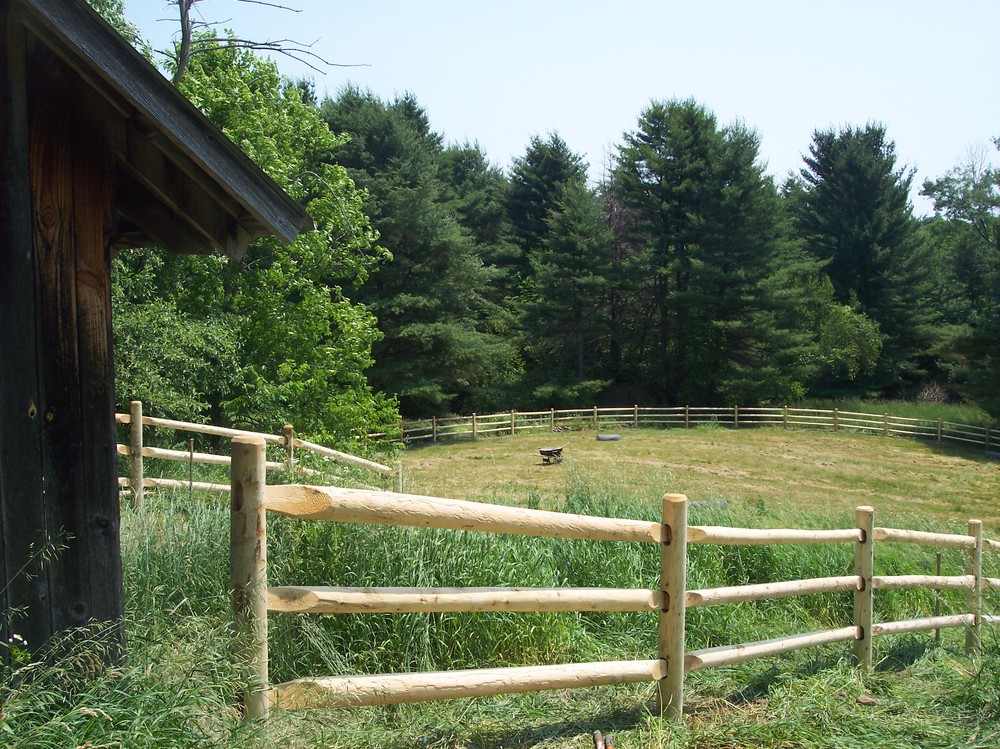
Split rail doesn’t have that problem. The natural wood profile:
- Blends into treelines and wooded property edges
- Complements existing stone walls
- Looks natural alongside barns and outbuildings
- Works across Vermont’s varied regions, from the Northeast Kingdom to the Champlain Valley
Whether your property is manicured or wild, split rail looks like it belongs there.
3. You Can Customize It for Your Actual Needs
Split rail is more flexible than it looks. Start with the basics:
- Two-rail or three-rail depending on how much containment or definition you need
- Red Cedar for a classic look that weathers to a soft silver-gray
- Black Locust for maximum rot resistance without chemical treatment
- Round Cedar for that raw, bark-on character that fits a farm or rural property
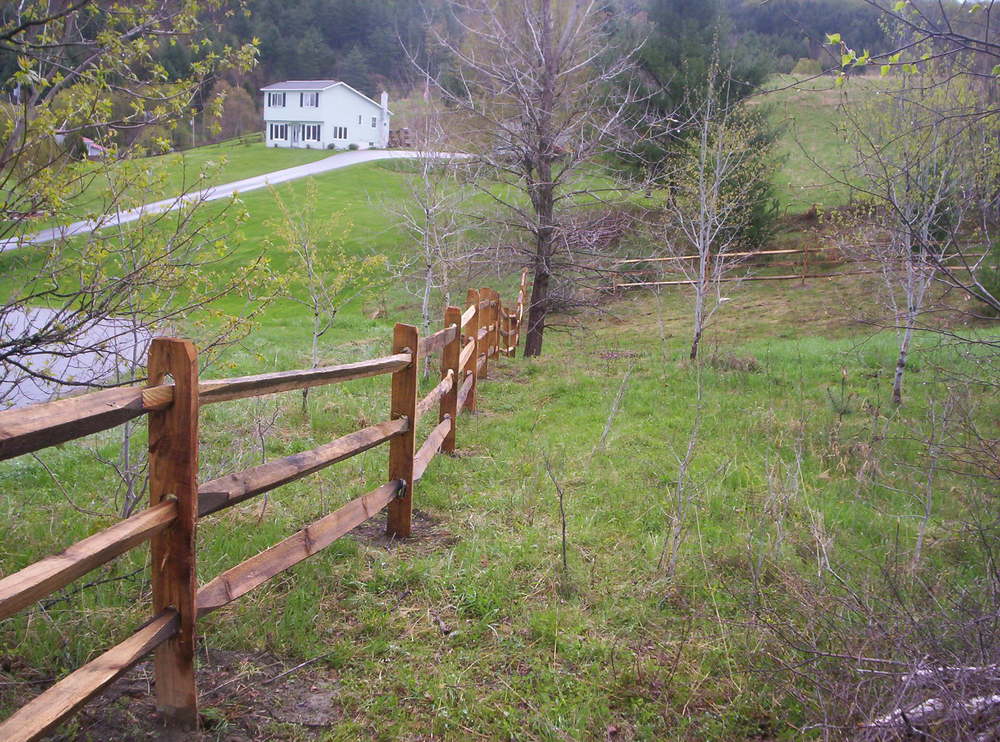
Need to keep dogs in without sacrificing the look? Add chicken wire or welded wire along the inside of the rails. Dealing with a sloped lot or uneven terrain? Split rail handles that better than most rigid fence systems.
4. It’s One of the Most Low-Maintenance Fence Styles Available
Vermont weather is not gentle. Frost heave, ice storms, wet springs, and dry summers put a lot of stress on fence materials. Split rail holds up because there’s simply not much to fail:
- No panels to warp
- No vinyl to crack in extreme cold
- No ornamental components to rust or corrode
- No painting or staining schedule to keep up with
With the right wood species and proper post installation, a split rail fence in Vermont can last 20 to 30 years with almost no upkeep. Black Locust in particular is known for lasting decades without any treatment at all.
5. It’s an Honest Value
Split rail fencing delivers strong value relative to what you spend. Here’s why the math works in your favor:
- Installation is straightforward
- Materials are naturally durable
- No ongoing costs for staining, painting, or repairs when the job is done right
- Long lifespan means you’re not replacing it in 10 years
For Vermont property owners who want a fence that looks good, lasts, and doesn’t require a maintenance schedule, split rail is hard to beat.
Thinking About Split Rail for Your Vermont Property?
Round Hill Fence has been installing split rail fencing across Vermont and New Hampshire since 1993. We work with Black Locust, Red Cedar, and Round Cedar and can help you figure out which option fits your property, your budget, and how you plan to use it.