Vermont winters are hard on everything. Sub-zero temps, frost four feet deep, freeze-thaw cycles that expose every installation shortcut. If you’ve heard vinyl fencing doesn’t hold up here, keep reading.
Most vinyl fence failures in Vermont are not material failures. They’re installation failures. The cold just makes them impossible to ignore.
My company, Round Hill Fence, has been installing vinyl fencing throughout Vermont for over 40 years. Here’s what actually holds up, and why.
Yes, Vinyl Gets Brittle in the Cold
A hard impact in extreme cold, a plow wing, a chunk of ice from a snowblower, can crack a panel that would flex and survive in warmer weather. Any contractor who tells you otherwise isn’t being straight.
But not all vinyl behaves the same. Two things separate quality product from bargain product in the cold:
- Virgin PVC. Virgin PVC (no recycled content or fillers) holds its structural integrity far better at low temps.
- UV inhibitors. UV inhibitors matter too. Vinyl without proper stabilizers degrades faster through freeze-thaw cycles.
We carry the Master Halco Illusions line because it’s built to a standard that holds up in Vermont, not just in states where the ground never freezes.
Vinyl Moves. Your Installer Needs to Know That.
Vinyl expands in heat and contracts in cold. That’s physics, not a flaw. The problem is installers who don’t account for it.
When expansion gaps are skipped, you get:
- Panels that pop out of their channels
- Rails that bow under pressure
- Stress cracks at bracket points
This is an installation failure that looks like a material failure. Proper installation means correct bracket tolerances, panels seated with the right clearance, and rails that can slide at the ends. It has to be done right the first time.
Frost Heave Is the Real Enemy
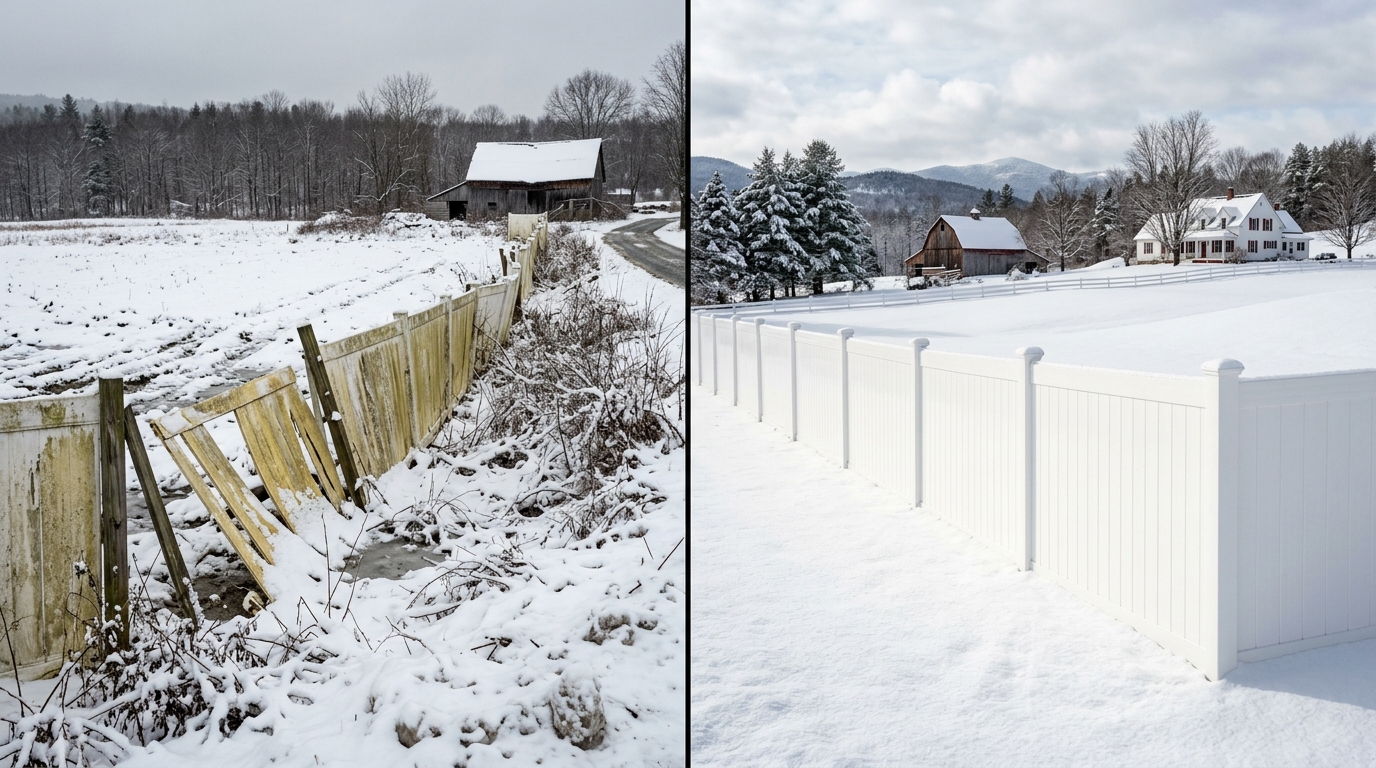
Vermont frost can drive three to four feet into the ground. Posts set too shallow, or without proper drainage, will shift and fail no matter what the fence is made of.
Vinyl makes heave more visible than wood. A wood fence with a heaved post looks a little wavy. A vinyl fence looks wrong immediately. The rigid, straight lines don’t forgive any deviation from plumb.
The fix is always in the ground:
- Posts set to the correct depth for Vermont’s frost line
- Proper post diameter for the fence height and span
- Gravel backfill at the base for drainage
Skipping gravel saves 20 minutes per post. The heave shows up three years later.
Why We Reinforce Posts with Steel Rebar
Most installers don’t do this. We do.
On taller privacy fences and all gate, corner, and end posts, we set two pieces of 1/2″ rebar in opposite corners of the hollow vinyl post before filling it with concrete. The post looks standard from the outside. Structurally, it has a steel spine.
In Vermont, this matters because:
- Frost heave puts lateral pressure on posts
- Nor’easters put wind load on tall privacy fences
- Heavy snow accumulation loads rails and panels
A hollow vinyl post is fine in mild climates. In Vermont, the reinforced post is the right call. Manufacturer specs back this up, recommending rebar for taller fences and high-stress locations. We apply it more broadly because we’ve seen what Vermont winters do to posts that weren’t built for it.
Don’t Overlook Road Salt
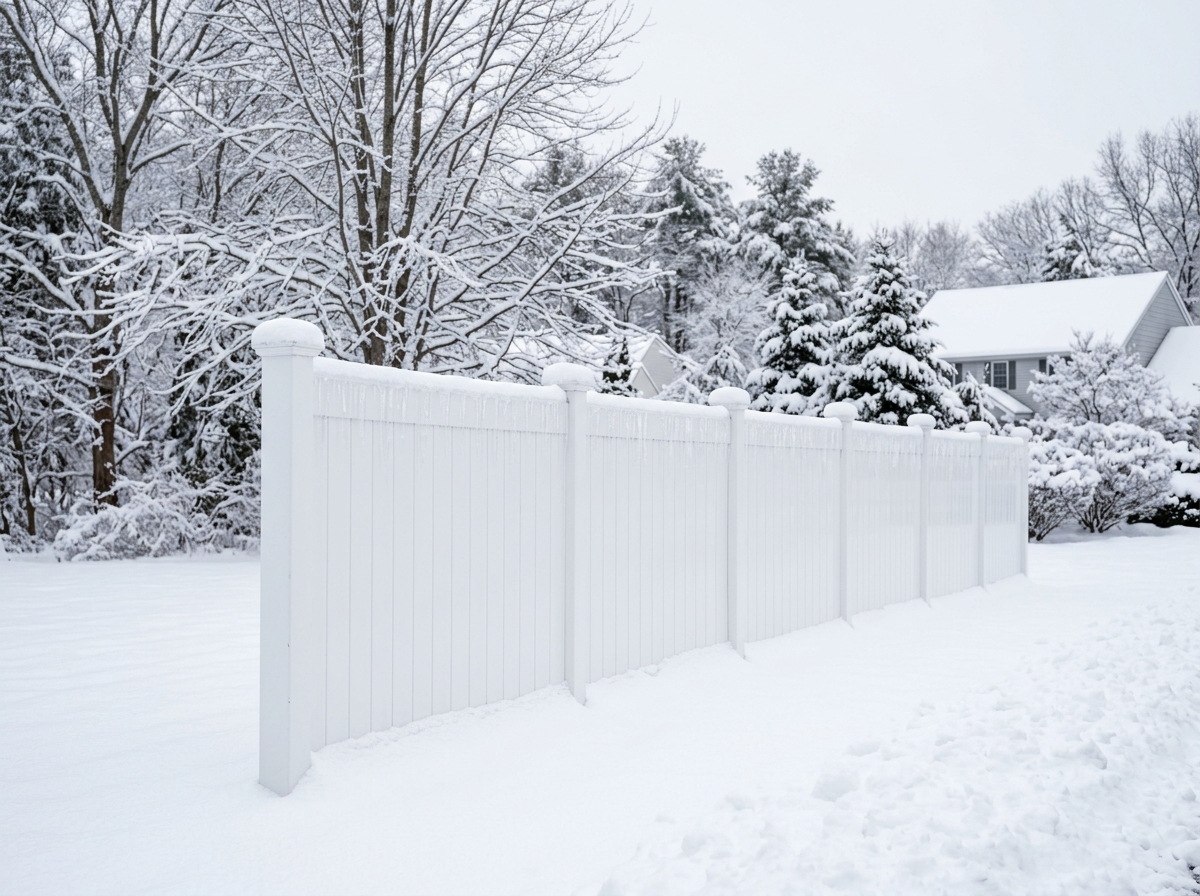
Vinyl handles salt exposure well. It won’t corrode or absorb moisture. The weak point is the hardware.
Brackets, hinges, gate latches, and fasteners that aren’t rated for high-corrosion environments will fail. Corroded hardware loosens posts and eventually compromises the whole fence.
If your fence is near a road or driveway, ask your installer specifically about hardware specs. Small cost difference, big impact over time.
What Vinyl Doesn’t Do in a Vermont Winter
- Rot. Vinyl doesn’t absorb moisture, so there’s no decay at post bases or along rails.
- Rust. No metal surface, no corrosion..
- Require prep. No painting, staining, or sealing before or after winter. It goes in and comes out looking the same.
We’ve installed vinyl at cemeteries, homes, and commercial properties across the Northeast Kingdom.
The ones we’ve replaced were almost always cheap product with shallow posts.
The ones we installed right are still standing.
The Bottom Line
Vinyl holds up in Vermont when the material is quality and the installation is done by someone who’s been through enough winters to know what goes wrong.
Before you sign anything, ask three questions:
- How deep are the posts going?
- Are gate and corner posts being reinforced?
- What product line are you using?
A contractor who can answer those without hesitating is worth hiring.
Round Hill Fence has served Vermont and New Hampshire homeowners, farmers, and businesses for over 40 years. Family-owned and operated out of Orleans, VT.